
A Placemaking Journal
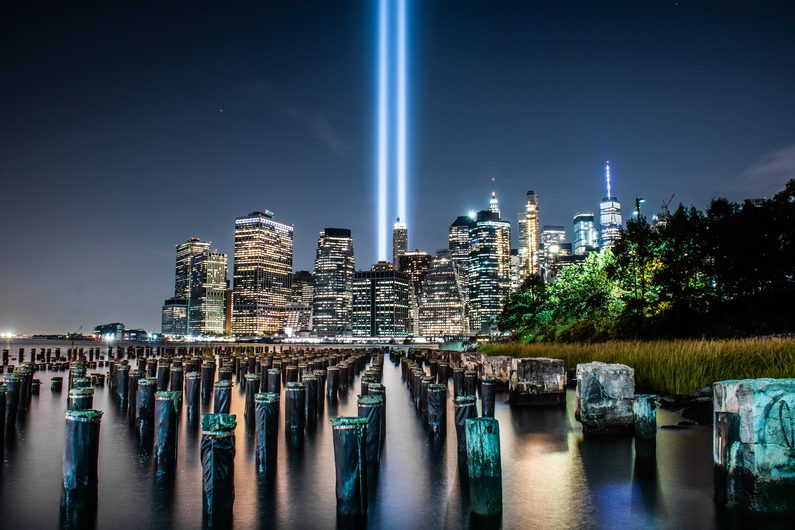
Reflections on 9/11 and Community Care
 September 11, 2026
Twenty-five years ago this week, I was two days into a new chapter of my career, sitting in a small seminar room at the University of Miami’s School of Architecture, in the first session of the Knight Program in Community Building, when someone opened the door and said a plane had just hit the World Trade Center.
Before I get to that morning, you need to know what led me there, because the two stories are tangled together.
When people asked me why I was going to planning grad school, I said “The world is not right.” I wasn’t sure exactly how, but I knew things needed to be better. My first week at UNC Chapel Hill, I stumbled into New Urbanism. At a party the first weekend, a classmate had Peter Katz’s book, The New Urbanism, sitting on her coffee table. I spent half the party buried in it instead of talking to anyone, because it was exactly what I was looking for. Then for the next two years, nothing in any of my classes taught about New Urbanism.
But I chased that interest however I could. I wrote papers about it whenever I had the choice of topic. I got special permission from my boss at my first job to join the New Urbanism listserv. And through that listserv, I heard about a new fellowship: working professionals from around the country would gather in Miami a few times a year to study community building across disciplines, led by program director Chuck Bohl, who I knew from UNC. I applied and got in.
At the time, I hated my first job out of planning school so much that I was seriously considering leaving planning to become a veterinarian. Now, I had taken no basic science classes in college, so I was going to have to take a year and a half of undergraduate courses before I could even apply to vet school. That’s how much I hated my job (the reasons why are a whole different story).
But two hours into the first session of the Knight program, I thought to myself: “Oh, I do have the right career. I just have the wrong job.” The Knight program is the reason I am still a planner today.
That second day of the first fellowship meeting, we kept talking after the first plane hit. It did not make sense yet. Then someone brought the news that a second plane had hit, and we stopped the session and spent the day watching television together.
Chuck asked us what we wanted to do. It was an emotional and disorienting time, and he offered to cancel the remaining sessions. One person in the group said they could not continue and needed to be on their own, and that was respected without question. But most of us said no, we are here to learn about community building, and this shows how much community building is needed. We were a multi-disciplinary group of architects, planners, engineers, community activists, journalists, and finance specialists, and we felt called to the work. We finished the planned sessions over the next couple of days.
Every flight in the country was grounded, and most of us did not live in Miami, so we had to work out how to get home. One of the other fellows, Joyce, lived outside Philadelphia. Her husband worked in bond trading in New York and, though he had not been injured, he knew people who had been in the towers and wanted her home. So Joyce and I rented a car and drove north together. It is a LONG drive from Miami to Pennsylvania, and between the heightened emotions of that week and the hours in the car, we shared our entire life stories. We are still friends today, twenty-five years later, because of that drive.
What I remember most from the days after I got back is the outpouring of care and feeling of community. The Philadelphia Orchestra gave a free concert, because, as they put it, people needed art in a moment like that. Later, the musical Come From Away told the story of the small Canadian town of Gander that took in thousands of stranded airline passengers when U.S. airspace closed and cared for them as neighbors for days.
That was one half of the story. The other half was the Patriot Act, a surge in surveillance and security measures, and a rise in anti-Muslim and anti-immigrant sentiment. That second half is what most people remember now when they think back on the aftermath. But it was not the whole story, and I think it is worth insisting on the other half too: the concert, the strangers taking in strangers, the instinct to gather and to care for each other. Both things happened.
So 9/11 is an emotional personal memory for me, as for many people. And it happened at a major watershed moment in my career. But it continued to be important for my professional life. About a year after 9/11, the Lower Manhattan Development Corporation, the agency set up to guide the rebuilding of the World Trade Center site, put out a request for proposals for people to support public engagement in the rebuilding process. I was still a young planner, with maybe two proposals to my name, but this work was exactly what I had been drawn to, and this event already mattered to me personally. I won one of two consultant slots.
One of the experiences from that contract has stayed with me ever since, because it was such a dramatic moment as a facilitator.
A jury to rule on the memorial competition had been set up, and they needed to hear from the public about what people wanted to see in the design. Even though there was no formal decision to make at that time, LMDC set up the listening session in a public hearing format: jury members on stage, and members of the public getting to speak for three minutes each, with a countdown timer and a person running a microphone to whoever was next. About 800 people came. Roughly 200 of them were firefighters, decked out in full firefighting gear, which is a sight to see. It remains the highest-profile event I have worked on in my career.
This was a genuinely raw moment. LMDC kept a room in its offices where family members left remembrances of people who had died, and it felt almost like a chapel inside an ordinary office building. One of the live controversies at the time was a disagreement between two groups of families: families of rescue workers, who wanted a memorial that specifically honored the people who ran toward the towers to save others, and families of office workers, some of whom felt that framing left out their own loved ones, who had also gone to work that day and died there.
My role was to stand on stage, select the raised hand who would get to speak next, and keep things moving to allow as many people as possible to speak in the three-hour window. The first time a family member of an office worker stood up and said the memorial should honor everyone who died that day, all 200 firefighters in the room booed. I said “No, we are not going to do that. Everyone here has the right to speak, and we are going to honor that.” Meanwhile I’m thinking to myself, “What am I going to do if they don’t listen or become even more disruptive? I don’t have any power to make them stop.” The next time it happened, only about half the firefighters booed. But that was the last time anyone booed. I’ve often thought that they were just so shocked that this little girl was standing on stage telling them what to do (I was 31 years old, five foot two, and looked younger than that). But more seriously I think people responded to a value they actually believed in once it was named plainly: everyone gets to speak—even when we don’t agree, we can treat each other with respect and honor their right to speak.
A facilitator’s first responsibility in a public process is not to produce agreement. It is to protect everyone’s access to the floor, especially when the room is full of people who have every emotional right to be furious.
Not every lesson from that contract was that dramatic. LMDC also asked me to run workshops gathering neighborhood input about how to spend federal community development block grant funds allocated for rebuilding. I like interactive formats. I do not like sessions where people sit and receive a presentation and maybe leave a comment. So I built a workshop around small-group brainstorming, followed by groups reporting their ideas back to the room.
At the first session, before we could break into groups, someone stood up and started airing a completely different grievance with the agency, unrelated to the grant funding. It is very stressful as a facilitator to have someone object to what you are doing in front of a room of strangers, and public engagement events are uniquely hard this way: the people in that room have never worked together before, will likely never be in a room together again, and have no ongoing relationship holding them together the way colleagues on the same team do.
My training told me the facilitator is there to serve the group, not to be in charge of the meeting the way a board chair might. So instead of telling the man to sit down, I turned to the room and asked how they wanted to handle it. Someone else, who knew him, said something like, “Bob, sit down. Everyone knows what you’re talking about, and that’s not what this meeting is for.” Someone else spoke up and said “Yeah, we want to move to the groups.” Bob sat down. That worked far better than anything I could have said, because if I had told him to sit down, I would have positioned myself against him, which is not the facilitator’s role, and because he had no reason to listen to a stranger running the meeting. He had every reason to listen to someone from his own community.
The last story also validated my training but showed me some limitations. The next workshop was in Chinatown. Facilitators are taught that the best thing to do is co-create workshops with participants. But in public engagement, we often don’t have the budget or time or early access to potential participants to do that. However, I did my best to check on cultural fit. LMDC had staff with strong relationships and personal connections to each of the neighborhoods, including a Chinese American staff member who worked with Chinatown. I specifically asked LMDC staff to review the proposed workshop plan with an eye for cultural fit with their neighborhoods. Everyone signed off.
Just after I explained the workshop agenda, an older community activist stood up and said this was not how his community does things. They wanted to hear from their elders first, together, as one group, not scattered into small tables. I believe strongly in small-group formats because they let far more people actually speak in the time available. In a room of 60 people, if everyone stays in one large group, each person gets maybe a minute of airtime total. Break the same room into ten tables, and ten people can be talking productively at once. I explained that reasoning. Someone else in the room said it was still important to hear from their elders first.
So we found a middle path. I gave the floor to the person who first spoke up. He spoke a bit and then invited another elder to speak. It all took about 10 minutes. I asked if anyone else wanted the floor. No one did. Then the room moved into small groups and participated actively for the rest of the session.
Two things stayed with me from that afternoon. First, adapting to what the room actually wanted was the respectful thing to do, and it did not require abandoning the reasoning behind small-group work, just shifting the sequence. Second, and more importantly: vetting a plan with one representative of a community, even a well-placed one who genuinely knows and cares about that community, is not the same as vetting it with the community. The staff member I worked with could not speak for every norm held by every person who would show up that day. I learned not to treat that kind of single check-in as a substitute for building the plan with the people who will actually be in the room, whenever there is any way to do that.
When I look back on 9/11 from this distance, twenty-five years out, what stays with me is not just the horror of that day, which is real, but the way it revealed how much capacity people have for care, for showing up for strangers, and for working through real disagreement without letting it destroy the possibility of being in community together. I still believe in that capacity, and I still believe it is work worth doing.
If there is a throughline for planners in all of this, I think it comes down to a few things. Protecting everyone’s right to be heard is not a nicety in public engagement, it is the actual job, especially in the rooms where people have the most reason to be angry with each other. The facilitator’s authority works best when it is barely visible, when the group polices its own norms because you named them clearly rather than because you enforced them. And no single community contact, however well intentioned, can tell you everything you need to know about how a community wants to be engaged. You still have to show up, listen for what you got wrong, and be willing to change the plan on the spot.
Twenty-five years later, I hope we remember both halves of that story: the trauma, and the orchestra playing anyway as strangers cared for each other.